Turn compliance into a competitive advantage
Extended Producer Responsibility (EPR) laws now tie your packaging data directly to the fees you pay. We help consumer products and retail companies report with confidence, lower costs through better packaging choices, and build programs that drive long-term business value.

Your packaging data is now a business opportunity
Producers selling into states with packaging EPR laws report detailed data on the packaging they put on the market, and program fees follow that data. The companies seeing the strongest returns treat that data as a business asset.
| Data accuracy sets your costs | Fee structures reward better design | Plans help drive improvement |
| Reports call for granular data on packaging types, materials, weights, and components. Estimates and errors can lead to overpayment of fees, resubmissions, and extra work. | Material fees and eco-modulation fees connect to packaging attributes and how well they fit with the EPR program’s aims for circularity and lower waste. | Most companies see the EPR invoices, but don’t yet have a plan to support changes. Improvement roadmaps help realize reduced fees and build a competitive advantage. |
COMPLY – OPTIMIZE – INNOVATE
Pure Strategies provides expert-driven support to move from meeting producer obligations with EPR compliance to otimizing packaging and driving innovations.
Common needs our clients have and solutions we can bring:
Our team helps you navigate the full range of compliance needs from data collection and analysis to CAA reports and advisory support and manage ongoing EPR compliance filings and reporting
•Identify opportunities to reduce EPR fee exposure
•Provide a plastic source reduction strategy
•Build a phased roadmap for program improvements
•Pinpoint which suppliers to engage on EPR and packaging
•Assess supplier readiness and data gaps
•Train suppliers and build action-oriented guides
•Build a robust sustainable packaging strategy that covers material issues to help manage potential trade-offs
•Model deforestation exposure and build a deforestation- and conversion-free (DCF) policy
•Assess greenhouse gas footprint
•Drive to safer chemistry in packaging
•Evaluate new packaging design options from a recyclability assessment to life cycle assessment (LCA)
•Provide a tool or guidance to evaluate emerging packaging options
Common starting points
Looking for expert support
If you have been managing EPR and sustainable packaging yourself or have a third-party tool, we find many companies still want expert support. In addition to the common needs above, here are common ways our team can bring you additional subject matter expertise on EPR and sustainable packaging.

EPR Data Review

Staff Training on EPR

Benchmarking

Improvement Roadmap
Tools to assess and advance your program



EPR and Sustainable Packaging
FAQ
Extended Producer Responsibility (EPR) for packaging shifts responsibility for the end-of-life management of packaging to the companies that produce or sell packaged products. In U.S. states with EPR laws, producers register with a producer responsibility organization, report packaging data, and pay fees that fund recycling and related programs.
Reporting typically calls for packaging data at the component level, including package types, material categories, weights, and the volume sold into each state. Requirements vary by state program.
Eco-modulation adjusts EPR fees based on packaging attributes such as recyclability or recycled content. It gives companies a direct financial reason to improve packaging design
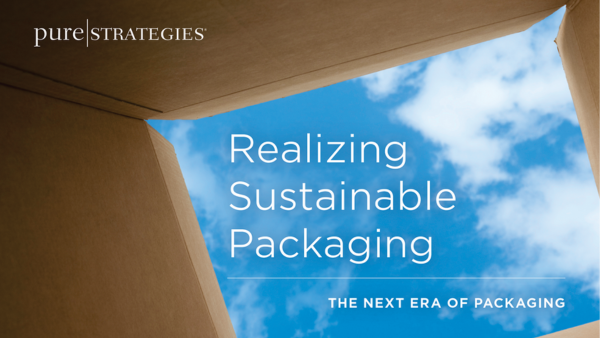
After companies have reported their EPR data and see their invoices, the best practice is to use that information to improve data quality and packaging design. A roadmap of improvement opportunities helps build a plan for what to focus on to bring business value. Our report, Realizing Sustainable Packaging, provides more information about this.
Packaging EPR can be complicated to navigate and understand. This means that to make progress, stakeholders from across the business. Pure Strategies has trained sectors, companies, design teams, and suppliers on what EPR is, what data is needed, and how to mitigate EPR fees with an EPR improvement roadmap. An example of our training is the EPR Readiness Accelerator.
No. Our sustainability experts provide data, strategy, and program support, and we work alongside your legal counsel on regulatory interpretation.


Our key sustainability consulting services
Sustainable solutions for business leaders
Pure Strategies provides customized sustainability services that help our clients build sustainability strategies and actionable programs, set meaningful goals, create sustainable supply chains, and optimize products and sustainable packaging.
Featured Pages

Strategy
From materiality and priority assessment to science-based targets, we help build and implement corporate sustainability strategies across products and supply chains.
Climate
GHG inventory management, climate risk and transition planning, science-based targets, and supplier engagement to advance climate strategies.

Nature
Deforestation and conversion-free programs, nature impact assessment, and strategies that protect, restore, and sustainably manage natural resources.

Circularity
Packaging inventory management, EPR, sustainable packaging strategies, life cycle assessments, sustainable chemistry, and product sustainability programs.
Advance circularity and drive business value